
Zoomed Vinay Special · First-person editorial
Trial by Fire and Poison Was Written Into Ancient Indian Law, as a Last Resort. The Modern Lie Detector Still Cannot Reliably Do the One Thing Both Promised.
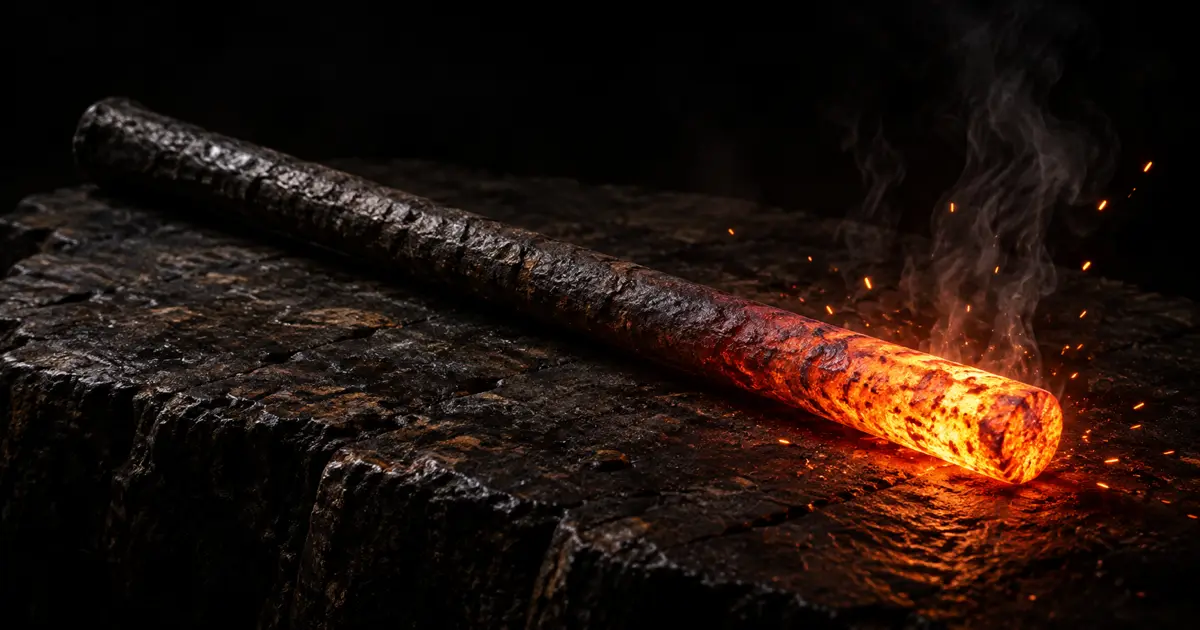
Classical Hindu legal texts describe it plainly: when human evidence ran out, the accused could be made to carry a red-hot iron bar, face water or drink poison, and coming through unharmed meant innocent. It sounds like pure superstition next to modern justice. But here is the uncomfortable twist: the National Academy of Sciences reviewed the science of the "lie detector" we still use today, and the results were not the vindication for modern science you would expect. Not equally bad, not by a long way. But on the one question both were built to answer, I will show you exactly where each one stands.
The point of view
Let's go into an ancient Indian courtroom. No security footage. No fingerprints. No DNA. Two people telling completely different stories, no witnesses, no documents, nothing left to check. The judge has run out of ordinary ways to find the truth. So the accused is handed a red-hot iron bar and told to carry it seven paces. If the hand is not burned, the gods have spoken: innocent. That is not a fantasy novel. It is a procedure described in real classical Hindu legal texts, and those texts kept it for the very last, after human proof. Now let me ask you something: the machine we use today, the polygraph, how much better is it at the one thing that bar was supposed to do? I wanted the answer to be "much better" too. Here is what the evidence actually says.
Continue with membership
Source Library
The Indian Judicial System — A Historical Survey
Justice S. S. Dhavan — Allahabad High Court
Original citation linked to this published story. Its downloadable Source record is still completing editorial publication.
Judicial Administration in Ancient India
Ithihas
Original citation linked to this published story. Its downloadable Source record is still completing editorial publication.
National Research Council, The Polygraph and Lie Detection (National Academies Press, 2003), Executive Summary and ch. 5
nationalacademies.org
Original citation linked to this published story. Its downloadable Source record is still completing editorial publication.
William G. Iacono and Gershon Ben-Shakhar, "Current status of forensic lie detection with the comparison question technique: An update of the 2003 National Academy of Sciences…
pubmed.ncbi.nlm.nih.gov
Original citation linked to this published story. Its downloadable Source record is still completing editorial publication.
Do 'Lie Detectors' Work? What Psychological Science Says About Polygraphs
American Psychological Association
Original citation linked to this published story. Its downloadable Source record is still completing editorial publication.
Do Polygraph Tests Work? Accuracy and Reliability Explained
Issues in Science and Technology
Original citation linked to this published story. Its downloadable Source record is still completing editorial publication.
The Enduring Myth of Lie Detection
Undark
Original citation linked to this published story. Its downloadable Source record is still completing editorial publication.